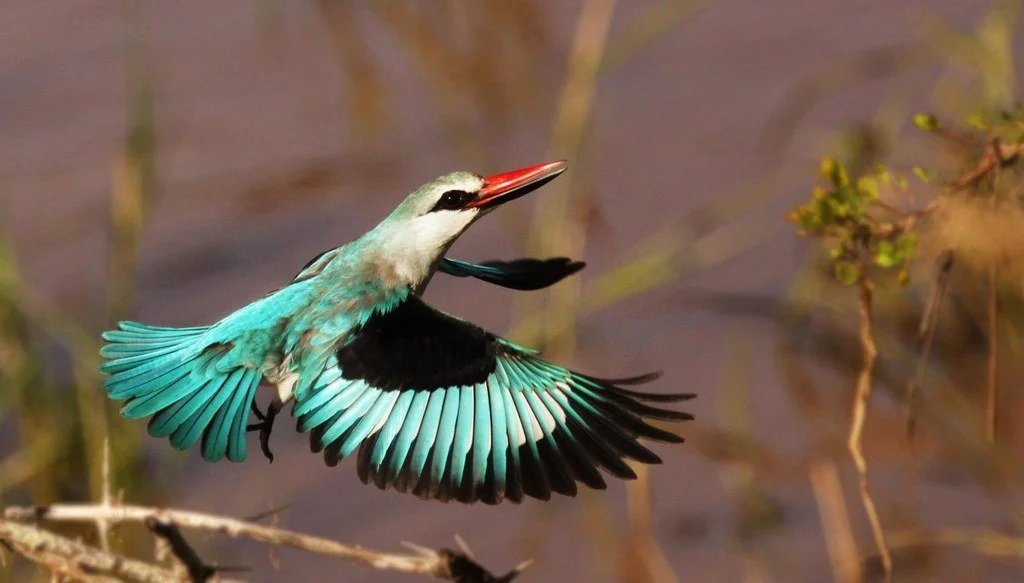
Birding in Africa, From First Sightings to Iconic Species
Africa’s eastern and southern regions are among the most spectacular birding destinations on earth. Not only are there beautiful and sometimes unusual species to discover and record, but embarking on the adventure itself will take you to locations that will leave a lasting impression.
Travelling in Africa will always be an unforgettable experience; taking good photographic equipment to capture every aspect of your journey, from the rich birdlife to magnificent landscapes, is essential.
The choice of locations is vast: dense rainforests, deserts of rolling red or golden dunes, canyons, highlands, massive wetlands, and open savannah plains stretching to the horizon. Each of these locations will present its own particular birdlife treasures.
Birding in Africa for Beginners and Experts
This endeavour is not only reserved for experts but can be equally enjoyed by novice birders of all ages. I started very young and quickly learned to identify basic features of a bird that led to faster identification. Soon, I was able to turn to the right pages in my bird books and find my bird in minutes. The joy of hearing a birdcall and knowing who sings brings an element of satisfaction to your journey; you feel better connected to and informed of the avian world around us.
The excitement around identifying a new species is like treasure hunting. However you choose to record, writing lists in a journal or capturing new finds in a database, a sense of pride soon develops as you tick off yet another bird in yet another country or environment.
It is wise to start recording from the start to facilitate order in your search. It won’t take long before you have to prove your find. Be sure to have good records easily available, and backup from photographs, no matter how hurriedly taken, will endorse your find without further doubt.
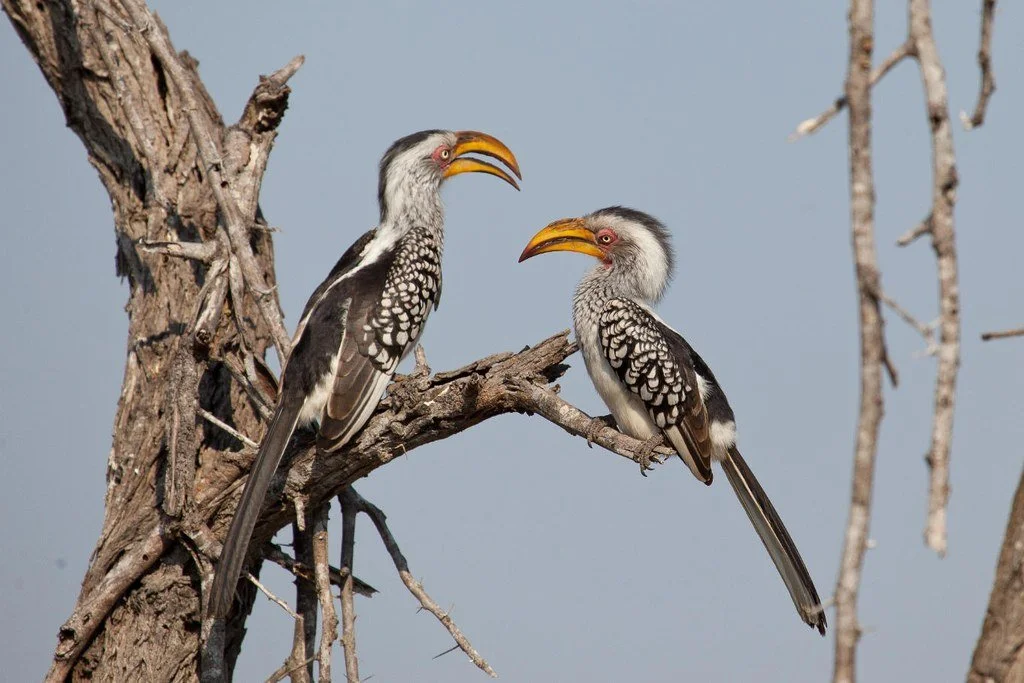
You may sense the element of competition beginning to enter. And there will be competition, argument, and debate: novices, genuine experts, and know-it-alls abound. But you can set your own benchmarks and be satisfied with your own identification skills. Sometimes you may be surprised and find a certain species where it is not supposed to be. This information is valuable and will enable you to make a contribution to the various ornithological institutions wherever you live or travel.
You will be amazed at the expertise of really good birders. They go alone or in groups in search of very specific species of birds, and they know exactly where to look, what time of day to set out, and the exact habitat of that bird. Their ability to swing a camera into action and take the perfect shot without scaring off the bird is also impressive. But it takes interest, time, dedication, study, and endurance to achieve these levels. Some enthusiasts will travel to far-flung places like Siberia to find some lark that just has to be ticked off the list.
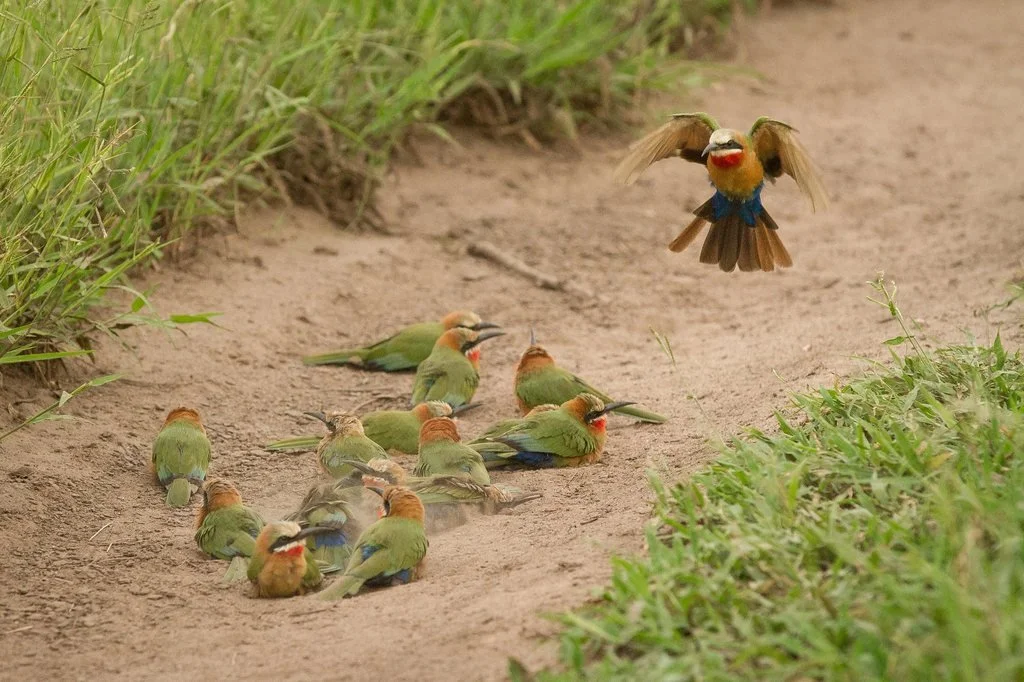
How to Start Birding in Africa
A good starting point is to arm yourself with the right books to help you identify the species in the regions you wish to visit, or simply where you live.
Some birder bibles are Roberts Bird Books, Sasol Birds of Southern Africa, and Birds of East Africa, as good examples.
There are many other great books, not as well-known as these, but which provide condensed information about the birds to be found in the region you are going to. For example: Kruger Birds, for South Africa’s Kruger Park birdlife, Kgalagadi self-drive birds, for birds of the Kgalagadi Transfrontier Park, situated in the southern Kalahari Desert straddling the borders of South Africa and Botswana. These kinds of books are particularly useful to novice birders; they target specific species to be found in those regions or parks, which makes it easier to identify what you spotted.
Technical support around birding is easily available today. All these books have easily downloadable Excel checklists. This is a good way to begin, as you record your finds, the regions in which you found them, or the species.
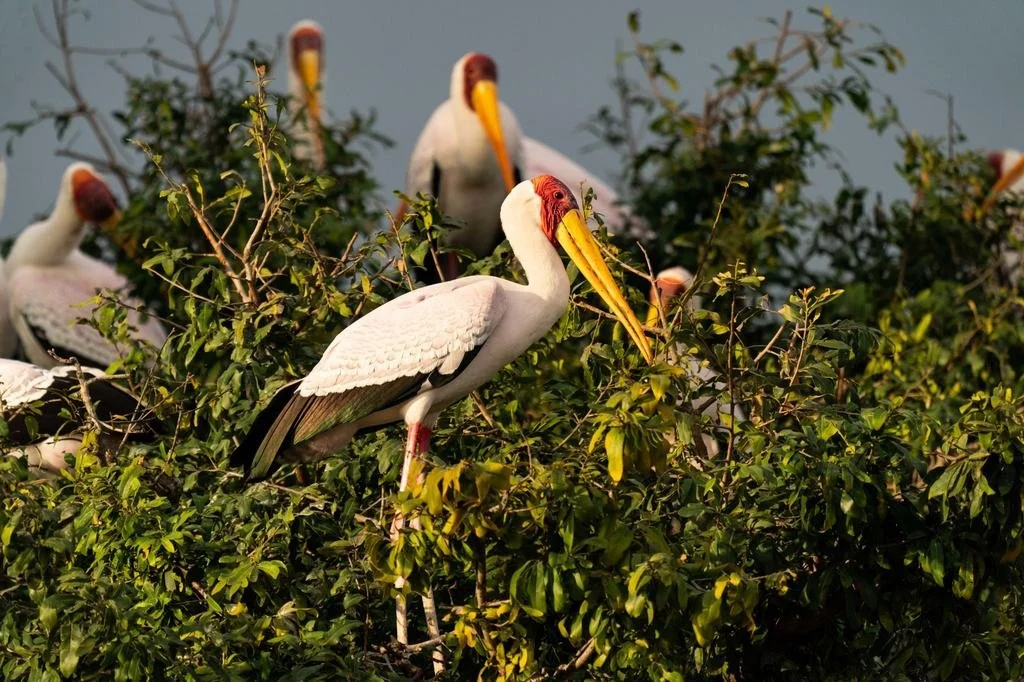
Gaining Experience
The more you step out and follow this passion, the sooner you will learn. It did not take the experts a few days or months to acquire the knowledge they have today. Some of the most famous have dedicated a lifetime to their quest to watch, record, and identify the birds around us.
Pay particular attention to the forewords or introduction sections in the books you buy. Most of them will help you to identify groups of birds by silhouette. This is important because once you grasp the fine art of birding, you will flick to the page on Barbets or Cranes and quickly find your bird.
Other important tips include noticing details like the colour of the beak and legs. Are they the same colour or different? The bird’s call, the way it flies or hops on the ground, these factors enable quick and efficient identification.
Another way to improve your identification skills is with mobile apps, such as Merlin Bird ID, BirdNET, Birdpro and… wait for it… Chirpomatic! These apps are ideal as you can record the birdcall and replay it for identification, or simply let the app hear the call and identify the bird in real time.
Some avid ornithologists may frown on this means of identification, but it’s a quick way to identify your bird and enhance your knowledge. As always with apps, some fact-checking is advised to be certain of your find.
Where and how to search
Birding can soon become a way of life. You collect books, gear, and a partner or friends to join you on an adventure into the wilds at every opportunity. Such is the beauty of this wondrous occupation. Birding combines friendship, competition, purpose, photography, the outdoors, Nature, and many other factors, rewarding for mind, body, and spirit.
Wild places like nature reserves, conservancies, game parks, bird or game sanctuaries, coastlines, lagoons, lakes, and rivers are all good places to look for birds. The list of various habitats is endless, all rich in birds especially suited to their specific environment.
Before we launch Part II of this series, we would like to suggest some locations.
Beginning in South Africa, the species count exceeds 870 birds - the highest number of endemic species and near-endemic birds in Africa, with over 140 species in these categories. The region hosts a mix of resident birds, Palearctic migrants, and intra-African migrants. Many species are concentrated in such unique biomes as those mentioned above.
There are over 300 game and nature reserves in South Africa. And that excludes simple, closer locations like your local park or green belts, hiking trails, or your own garden.
To fire your enthusiasm for this wonderful recreational activity, we’re going to target some iconic Southern and East African species, where to find them, and why they are mentioned. We will break this down into 7 groups: Raptors (Birds of Prey), Seed-Eaters, Fruit-Eaters (Frugivores), Insectivores and Specialised Feeders, Passerines (Perching Birds), Water birds and Waders, Ground-dwelling birds, Owls and Nightjars.
Raptors
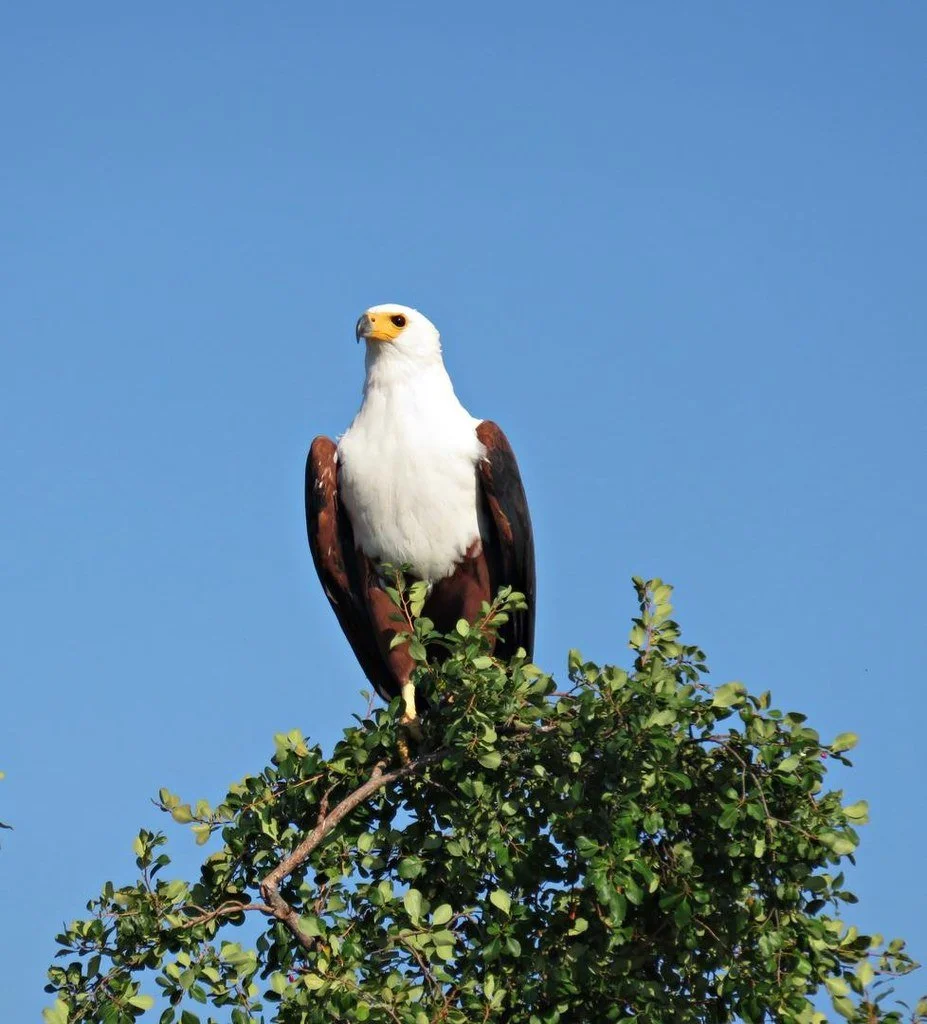
The African fish eagle is found at large bodies of open water with an abundant food supply in sub-Saharan Africa. It is the national bird of Malawi, Namibia, Zambia and Zimbabwe. This large brown and white eagle lives off both fresh and saltwater fish found in the bushveld and coastal lagoons and estuaries.
It weighs around 3 kg, has a wingspan of 2m, can haul a fish weighing 2 kg out of the water, and fly with it back to its nest, usually in a large tree near the water’s edge.
This bird is known for its iconic, haunting call, often described as the “sound of Africa”, or the “sound of the wilderness” - a symbolic soundtrack to the African landscape. It is a distinctive, loud, and resonant yelping cry that carries over long distances, serving as a powerful territorial display. It also presents one of the best challenges to those avid birders who come armed with professional cameras and large lenses. The perfect shot, and a very difficult one to capture, is the one when the eagle snatches its prey from the water.
Seed-eaters
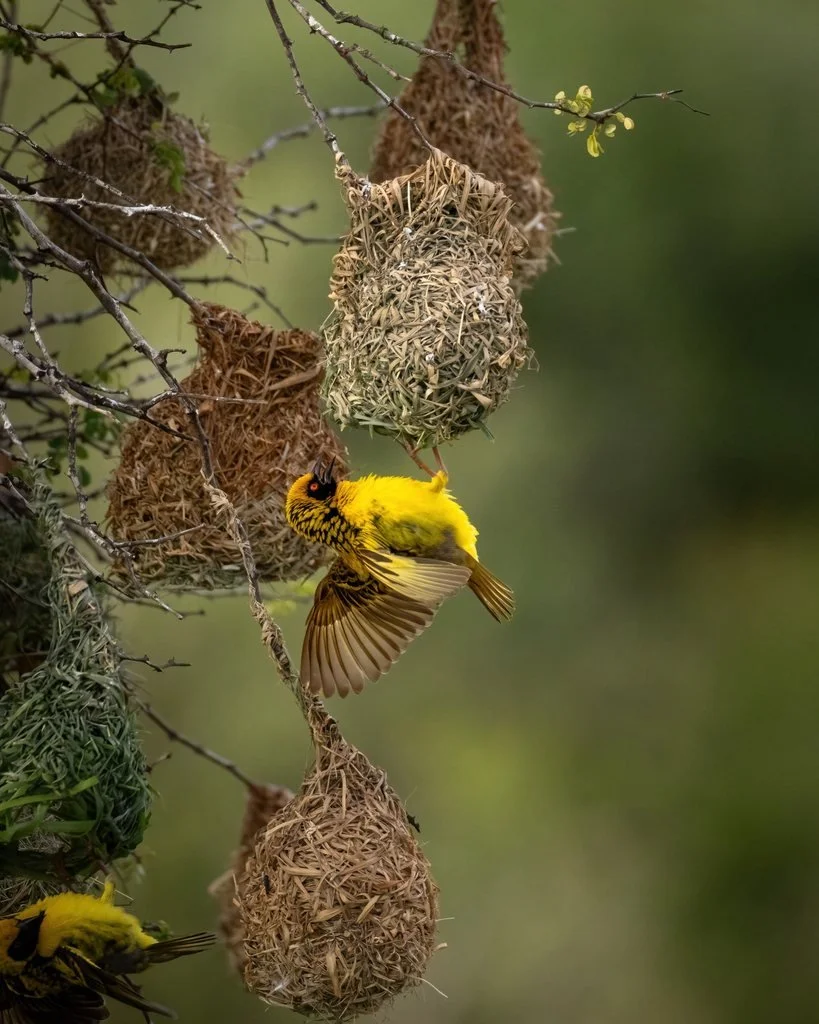
Our bird of choice here is the masked weaver, a resident species found throughout Southern Africa.
The breeding male has a black face mask with a narrow black band on the forehead above the bill and a startlingly bright yellow body. The species is an abundant resident throughout the open savannah and semi-arid areas, nesting colonially above water or in large trees. This bird will be easy to find, almost always near water.
Weaver birds are the only birds documented with the ability to tie knots. The males spend the breeding season in full plumage, making one nest after another from intricately woven reed, grass, or palm frond strips to impress the females. If the nest doesn’t meet her requirements, she will then tear it apart, and the male starts all over again.
These are pretty, busy little birds, and always entertaining to watch.
Fruit-eaters
Here, we have to choose two birds in particular: The Knysna turaco and the eastern plantain-eater.
The Knysna turaco is found in the evergreen forests of southern and eastern South Africa and Eswatini. The pure beauty of this bird earned it a perch on the list. The small but thick orange-red bill and a white line just under the eye contrast with the mainly green plumage. It has a tall green crest, tipped with white. The eye is brown and the eye-ring deep red. In flight, the Knysna turaco shows conspicuous crimson primary flight feathers.
The eastern plantain-eater is a large, loud, grey turaco species common in Uganda’s savanna, woodlands, and gardens. Recognizable by its long tail, bushy crest, and yellowish bill, this bird is frequently seen in small groups, particularly around Lake Victoria. I like to call this one the “clown of the forest”.
Insectivores and Specialized Feeders
The choice here between bee-eaters, rollers, hornbills, hoopoes, and kingfishers is the most difficult. Here we have a combination of beauty, cunning, speed, and unusual behaviour such as rolling.
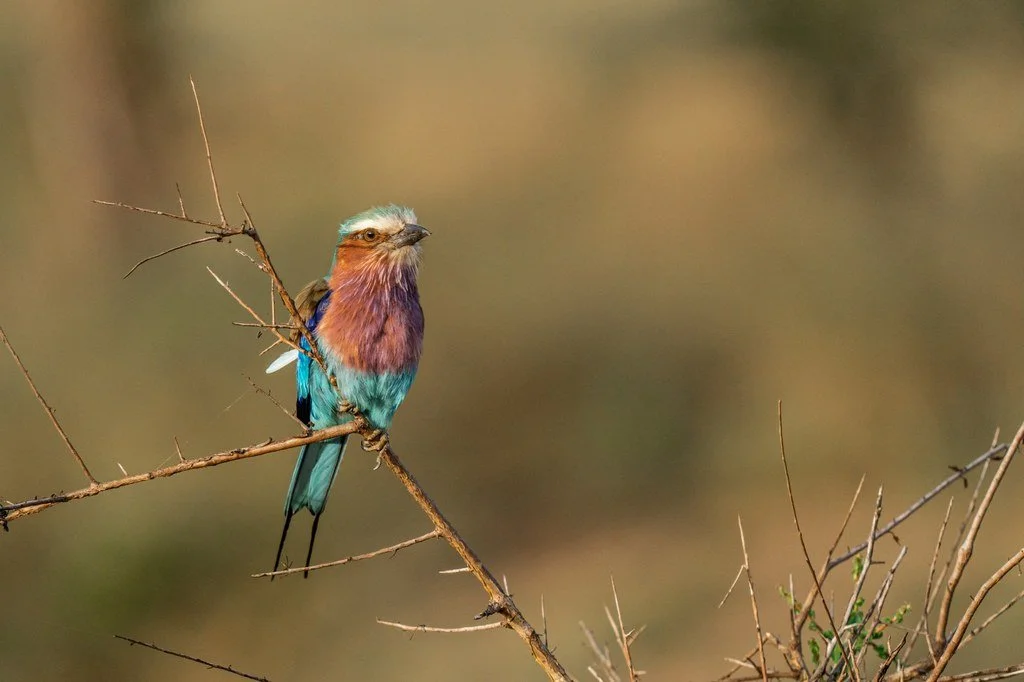
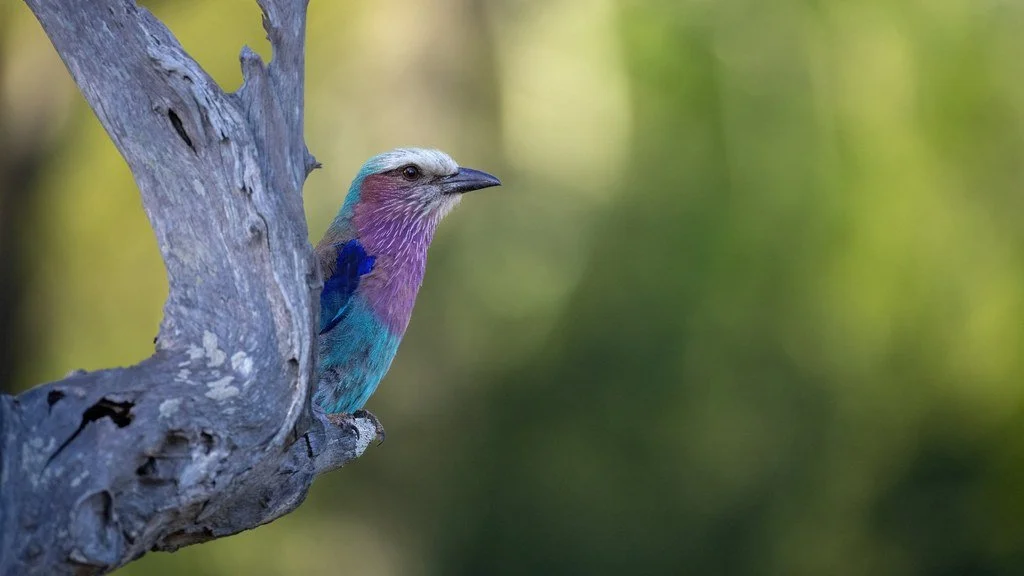
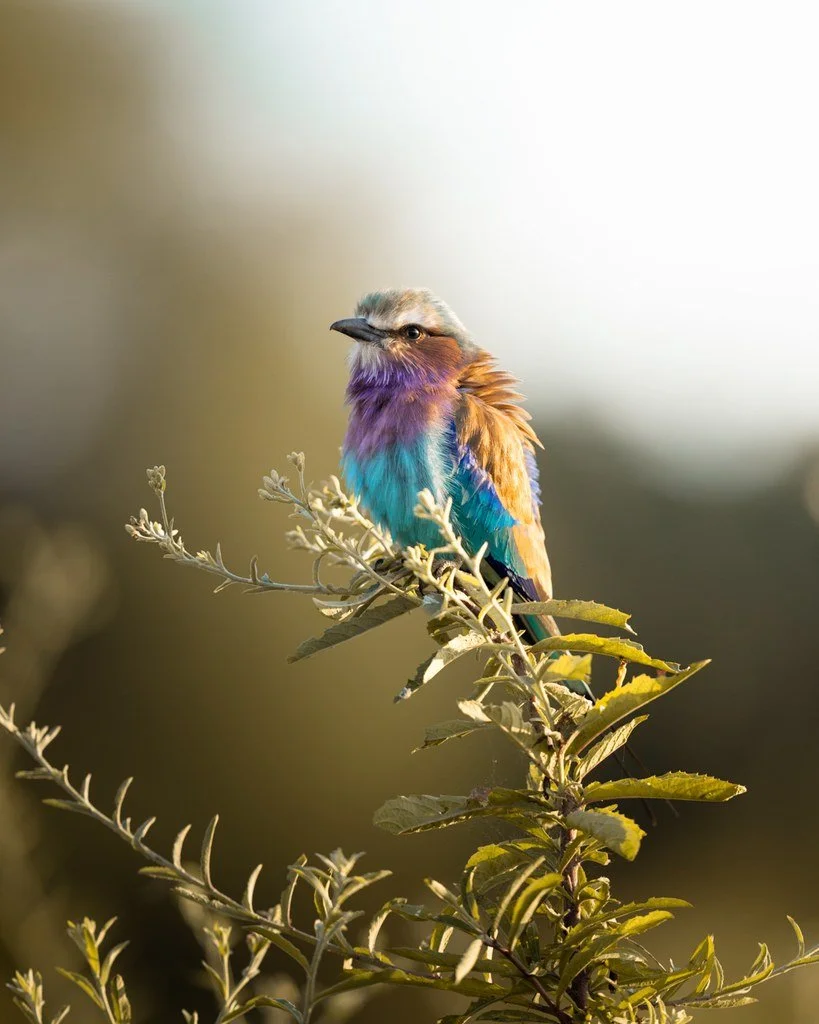
I chose the lilac-breasted roller.
This bird is widely distributed in southern and eastern Africa. It prefers open woodlands and savanna and can be found in all its glory perched high up on a branch or pole, surveying the area for insects and small amphibians. The variety of different colours this bird displays earned it its place on the list. From the lilac breast, cheeks, and ear coverts to the white and olive crest of the head to brilliant azure, black, and dark purple blue of its wings, this specimen wins the beauty contest!
Pairs are very protective of their nest, and one will fly in a rolling pattern as a territorial display against intruders. During courtship, a lilac-breasted roller will fly upwards and then tip forward with the wings closed before flapping to gain speed towards the ground. While levelling out at the highest speed, the bird will roll to the left and right a few times, uttering a harsh, raucous cry before swooping up again.
Passerines (Perching Birds)
Without doubt, seeing a crimson-breasted shrike for the first time is simply breathtaking. The striking combination of the black and white upper parts and bright scarlet breast is remarkable, particularly when it is found in dry thorn bush areas in thickets and riparian scrub. It comes as quite a surprise to find such a beautiful bird in such drab surroundings. These are the gems of birding in Africa.
Water Birds and Waders
The shoebill, also known as the whale-headed stork, whalebill, and shoe-billed stork, is a large, long-legged wading bird. Its name derives from its enormous, shoe-shaped bill. It has been placed more in the gene camp along with pelicans and herons than storks. It can be found in tropical East Africa in large swamps from South Sudan to the swamps and marshlands of Southern Africa.
It wins the wader prize for being ugly, with its slate grey colouring, stock-still gaze, and quick, violent attacks on the prey that it swallows whole with its big ungainly bill. But due to its unusual conformation and behaviour, it is regarded as one of the five most desirable birds in Africa by birdwatchers.
Ground Dwelling Birds
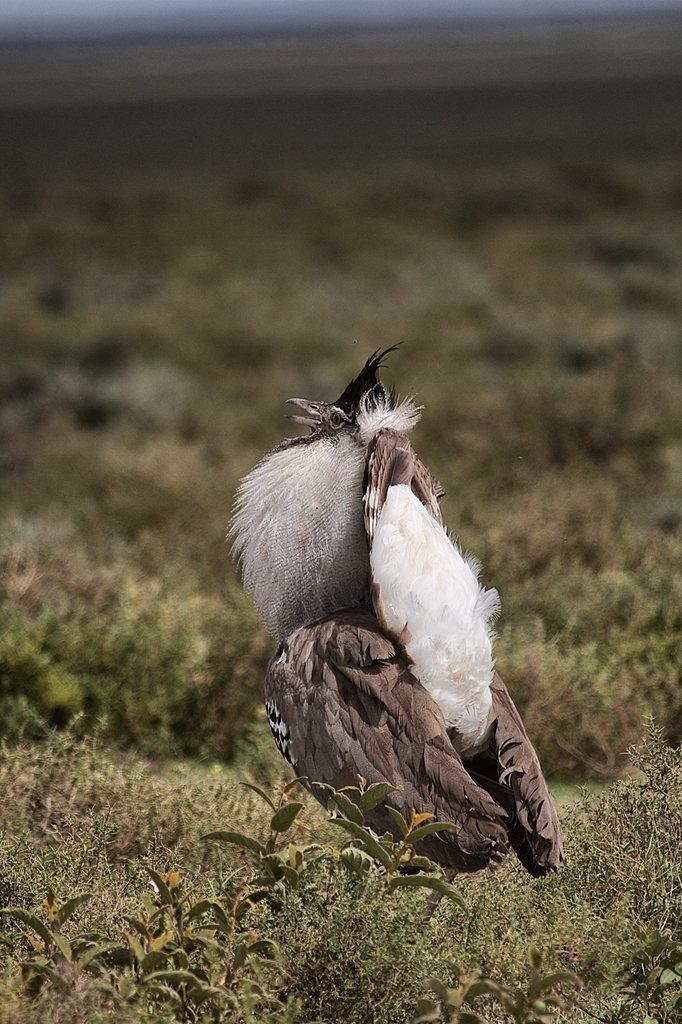
The male kori bustard is believed to be the heaviest living animal capable of flight. This is hard to believe considering they can weigh up to 18 kg and have a wingspan of 2,75m! It is a ground-dwelling species found in open grassy dry areas, high plateaus, and arid scrublands. Standing between 1,2 and 1,5m tall, it is always a delight to spot one of these huge birds, especially when it takes flight. It takes off with a slow, laborious, and heavy-winged, airplane-like take-off. They typically require a running start to get airborne, though they can rise from a standing position if danger threatens.
This species is prominent in many native African cultures due to its imposing, impressive size, spectacular displays by adult males, or the cryptic nature of the nesting female. They feature in the songs and dances of the San people of Botswana, and paintings of these bustards feature in ancient San rock art.
Night Jars and Owls
There are many species of owls and nightjars in Africa that are fascinating due to their nighttime activities. Pel’s fishing owl is one of the largest owl species in the world and ranks fifth-heaviest on average. Its size, call, colouration, and fishing habits make it an irresistible choice. It is found throughout a large part of sub-Saharan Africa, and due to its diet, it is not usually found in the drier parts of the continent. Adults are a rich ginger-rufous colour with dense dark bars to the upperparts and scaling to the underparts. The feathers around the head are loose and long, giving the head a shaggy appearance or “bedhead” look. The song of the male Pel’s fishing owl is a deep, sonorous, horn-like boom, first a single and then a higher pitch. The male also utters a ringed hoot, much higher-pitched than those of most eagle-owls, followed by a deep, soft grunt.
Before we sign off on this group of birds, a thought has to be given to the many other species of owls and nightjars that grace our wonderful African evenings with their song.
Your Next Africa Birding Experience
Please contact us at Nomara Africa Travel to discuss and craft a birdwatching adventure in Africa.
We can help you find your species and manage your bookings, lodgings, and bush flights into the kind of regions to guarantee your success.
From the waterways of the Okavango Delta to the soda lakes of the great African Rift Valley, we can help you find that shoebill in the swamps and marshes, or pelicans and flamingos in the Ngorongoro Crater in Tanzania or Lake Nakuru in Kenya, also known as “flamingo city.”
We can plan your trip to the southern African game parks in search of martial, bateleur, crowned, and fish eagles.
Come and see the magnificent carmine bee-eaters nesting in the banks of the Chobe River, Botswana, or find the Cape sugarbird in the fynbos and flora on the south-western tip of Africa.
Enjoy the clowning around of the eastern plantain-eater in Uganda whilst gorilla trekking.
Whichever bird you seek, we will help you find it and tick it off the list.
Look out for part II of our Birding in Africa series.
If you enjoy these insights, Craig sends a monthly newsletter with more — destination notes, safari advice, and trip ideas straight from the field.
Quick FAQs
-
Eastern and Southern Africa offer exceptional birding variety because they combine wetlands, forests, savannah, deserts, highlands, and river systems, each with its own birdlife. That range gives birders access to both iconic species and highly habitat-specific sightings.
-
Yes. This article is written for both beginners and experienced birders, with simple starting advice on identification, habitats, record-keeping, books, and apps that make it easier to begin.
-
Part I highlights the African fish eagle, masked weaver, Knysna turaco, eastern plantain-eater, lilac-breasted roller, crimson-breasted shrike, shoebill, kori bustard, and Pel’s fishing owl.
-
Some of the most rewarding habitats include wetlands, riverbanks, lagoons, savannahs, evergreen forests, thorn scrub, open grassland, and marshes. Different bird groups are tied closely to different landscapes, so habitat matters a great deal.
-
A good starting point is a regional bird book, a simple way to record sightings, and a mobile identification app. Over time, experience grows through repeated observation, attention to calls, silhouette, beak colour, leg colour, and behaviour.
-
Yes. NOMARA Africa Travel can help shape a birding journey around the right habitats, countries, camps, and bush flights, whether your interest is broad birding, iconic species, or a more focused search in Eastern or Southern Africa.