Gorilla Trekking in Uganda, Our Bwindi Encounter
There is plenty of talk around gorilla trekking
Before you go, it can sound like hype. After you go, once you have pushed through thick rainforest, felt safari ants testing your ankles, and finally settled into the undergrowth with a gorilla family nearby, you understand why it stays with people for years.
Where to find mountain gorillas
Mountain gorillas live in misty, high-altitude forests in East-Central Africa, in just two main pockets. One is the Virunga Mountains, spanning Rwanda, Uganda and the Democratic Republic of Congo. The other is Uganda’s Bwindi Impenetrable National Park, linked to the Sarambwe Nature Reserve across the border. These are cool, dense landscapes of bamboo, vines and montane forest, where cloud clings to the canopy and the air feels several degrees colder than you expect, especially in the early morning.
Mountain gorillas
Seeing wildlife in Africa is always rewarding, but gorillas land differently. Part of it is familiarity. Their hands, their eyes, the way a family moves together, all of it feels strangely close. They have complex social bonds, clear leadership, tender mother and infant relationships, and a calm intelligence that you sense even in a quiet moment. Meeting them in the wild is not only a sighting, it is a shared space, and that is why it can feel so profound.
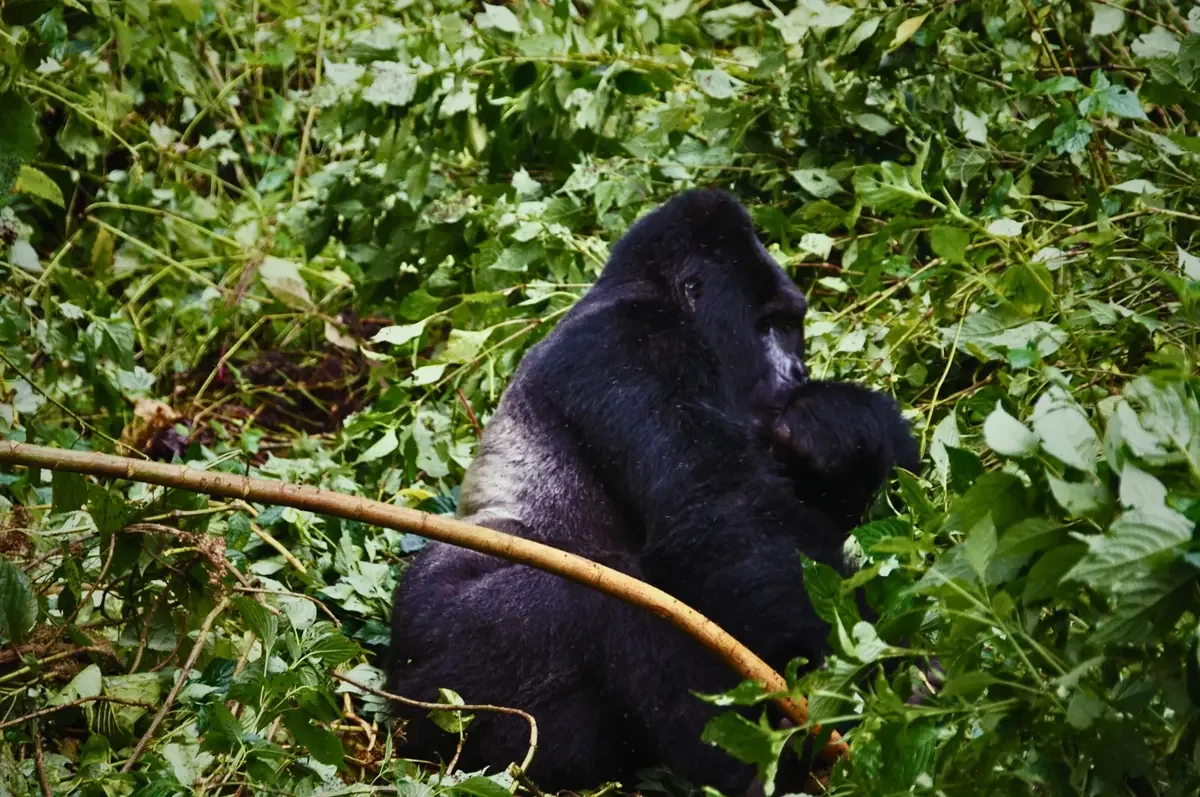
A few practical facts help set the scene before you step into the forest. Mountain gorillas are one of two subspecies of eastern gorillas. They are larger and hairier than lowland gorillas, built for colder elevations. Adult males, known as silverbacks, earn the name from the pale saddle of hair that develops across the back as they mature. Their size is impressive, but it is the mix of strength and restraint that lingers in your memory, especially when a silverback chooses to simply watch, rather than react.
Then there is the setting itself. Bwindi and the Virungas have an otherworldly feel, layers of green, dripping leaves, mossed trunks and deep undergrowth, with light filtering in like it is passing through smoke. The forest is ancient, and you feel that age in the silence between bird calls.
Lowland gorillas
Lowland gorillas, both western and eastern, live in warmer, lower elevation forests, with different habitats, different densities, and different trekking experiences. Western lowland gorillas range across parts of Central Africa, including the Republic of Congo, Gabon, Cameroon, Central African Republic, Equatorial Guinea and sections of Angola and the DRC. Eastern lowland gorillas, also known as Grauer’s gorillas, are found in the eastern DRC.
Our personal experience begins here
We had never seen gorillas in the wild, so we honestly did not know what was waiting for us. The lead up alone felt like a hint of the scale of the day ahead, muddy tracks climbing into fog, waterfalls cutting across the road, cliff edges, small villages, and sudden openings where you could look back over hills that seemed to roll forever. Nothing you read properly prepares you for the environment you enter.
Here is how we navigated this chapter of our journey in Africa, and what we learned along the way.
We chose Bwindi Impenetrable National Park in Uganda for our gorilla trekking experience because we were already travelling through Uganda during an across Africa trip. It turned out to be an excellent decision. Bwindi protects a significant portion of the world’s remaining mountain gorillas, with a number of habituated groups, and the regulations around trekking help keep the encounters respectful and controlled.
Before Bwindi, Uganda had already surprised us, in the best way. We had been fishing for giant Nile perch in the churning pools below Murchison Falls, exploring Queen Elizabeth National Park in search of the Ugandan kob, and enjoying some of the best birding we have ever experienced. That is a story for another day, but it matters because Uganda is not a one moment destination. It is layered, scenic, and full of wildlife beyond the headline experiences.
Bwindi Impenetrable National Park
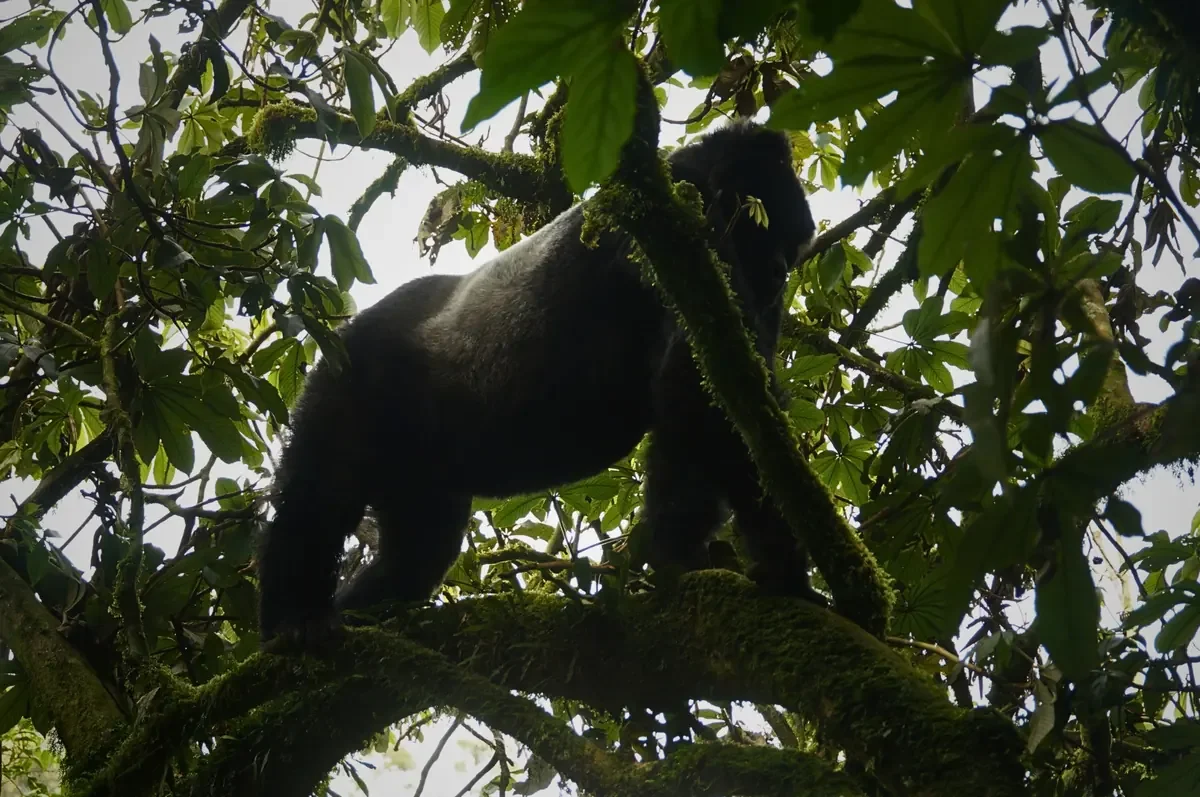
Bwindi sits in southwestern Uganda and is a UNESCO World Heritage Site. It is famous for its critically endangered mountain gorillas, and also for its biodiversity, with primates, birds and butterflies thriving in the forest. Gorilla trekking here is tightly regulated, which means permits, set group sizes, clear rules, and rangers who take the welfare of the gorillas seriously.
Gorilla trekking permits and etiquette
Your permit controls almost everything about the day, including the sector, start time and group size. Once you reach the gorillas, the viewing time is limited, usually around an hour, and that time goes quickly. Expect clear guidance on distance, voice level and photography. No flash, no sudden movements, and if you are feeling unwell, you should not trek. This is not theatre, it is conservation, and the small rules are what protect the gorillas and keep trekking possible.
Good preparation also makes the trek easier. Long trousers, long sleeves, gloves for grabbing nettle covered plants, waterproof boots with grip, and a rain jacket are the basics. A porter can also make a big difference, not only for comfort on steep sections, but as a direct way to support local communities.
Best time for gorilla trekking in Uganda
Bwindi is a year-round destination, but conditions change with rains. In the drier months the trails are less slippery, and the walking can feel easier. In wetter periods the forest is at its most lush, but you should expect mud, slick roots, and the possibility of a downpour if morning begins bright. Either way, start early, pack a dry bag for your camera, and allow time to slow down and enjoy the forest itself. The trek is only one part of the story, the atmosphere is the other.
Getting there
Getting up into the misty heights where gorillas live is part of the adventure. If there was ever true 4x4 territory, this is it. This was the first place we had to use low range in first gear, and we meant it. The roads wind up mountainsides through hairpin bends, past waterfalls, and across stretches where the track becomes a shallow river. Even the buses somehow appear, overloaded, inching their way up and down with a determination that you can only admire.
The mud tells stories too, deep ruts left by vehicles that have slid, spun, reversed and tried again. Around one bend we met a set of tracks so chewed up you could almost picture the struggle that created them. Low range got us through the worst of it, climbing like a tractor. It was challenging enough that we barely filmed anything; it took two of us to navigate. My co-pilot, my 22-year-old son, folded the mirrors in to squeeze between rock walls on one side and a steep drop on the other, calling directions as we edged through, centimeter by centimeter. Then there were oncoming vehicles, and the real test began, because two cars could not pass on those narrow tracks and reversing was almost impossible. Somehow, we did it. It is the way of Africa.
There are easier ways. The simplest route is to fly into Kihihi or Kisoro, both with connections from Entebbe, then drive on through rolling hills and rich green valleys to reach your lodge. It is a beautiful approach, with village life along the roadside and, on clear days, views that stretch towards the Virunga range.
For travelers who enjoy the road, the drive from Entebbe can take 7 to 9 hours depending on the sector you are staying in. You pass tea plantations, busy trading centers, and the rising terrain of the Kigezi Highlands. It is long, but it can be deeply scenic, and it gives you a more authentic sense of Uganda’s landscapes.
After our own experience, our advice is simple. Work with experts when you plan this sort of expedition. The route is only one piece. The right sector, the right lodge, permit logistics, timing, and small details like what to wear and what to pack can make the day feel smooth, rather than stressful. We had a good experience, but there are simpler and wiser ways to do it, and far better accommodation options today than were available when we travelled through.
If you want guidance based on personal experience, NOMARA Africa Travel will help you shape the journey properly.
Accommodation
Our accommodation was comfortable, but simple. The main thing to remember is that it is cold up there. Choosing where to stay deserves attention, especially if you want warmth and ease after a trek. Fireplaces in rooms or shared spaces are a genuine luxury. If you do not have that, pack warm layers, a rain jacket, and something cozy for evenings.
Today, Bwindi has a wonderful range of forest lodges and camps across the different sectors. Luxury tented camps and elegant chalets with private verandas offer sweeping views over the canopy. The best properties combine thoughtful design with genuine hospitality, and after a damp morning in the forest, coming back to hot tea, a warming lunch, and a comfortable seat by the fire can feel like the perfect balance. Some places do this brilliantly, with slow dinners that stretch into the evening, local flavors, and the kind of simple comfort that feels earned after time in the rain.
Many camps in Bwindi are also built with a lighter footprint in mind, using solar power, water conservation, and careful waste management to protect the ecosystem. It is a sensitive environment, and it is reassuring to see accommodation taking that responsibility seriously.
NOMARA Africa Travel can guide you to the right lodge for your style, your budget, and your preferred sector.
The gorilla trekking experience
We trekked in the Ruhija sector of Bwindi, in the eastern part of the park. At the time, this area had a small number of gorilla families, including habituated groups such as Bitukura and Oruzongo. A smaller number of groups in the sector can mean less visitor traffic, which can make the experience feel calmer and more intimate, depending on permit availability and daily allocations.
Armed with our permits, we met early at the Ruhija park office. The briefing is important. The guides explain what to expect, what to do when you reach the gorillas, how to behave, and why the rules matter. After that, the trekking groups split. Our group headed out in search of the Bitukura family, while the other group went looking for Oruzongo.
One practical tip that is worth repeating, tuck your trousers into your socks. Safari ants are not a myth. We followed the advice. One traveler in shorts did not, and learned the lesson quickly, hopping and howling as the ants swarmed his ankles. If memory serves, he turned back. It is an expensive way to learn about proper clothing, and it is avoidable. Today, many lodges also keep gaiters and basic gear on hand, but you still want to arrive prepared.
The guides generally know where the gorilla families are, in broad terms, but the forest decides how long you walk. Some treks take an hour. Others take most of a day. That unpredictability is part of what makes the experience feel real, not staged.
For many people, the emotional build-up starts the moment you step into the jungle. You think about the hike, about the terrain, about the possibility of rain, and about the quiet rules around keeping distance. You also wonder how you will feel when you see them, and whether you will. There is a lot going through your mind as the first leaves close in behind you.
The forest is unforgettable. The air is humid and still, broken by a soft rustle, the distant call of a turaco, the snap of a branch somewhere ahead. You walk through giant ferns and tangled vines, past moss-coated trunks and damp leaf litter that smells rich and earthy. It is a place that pulls you into the moment, step by step.
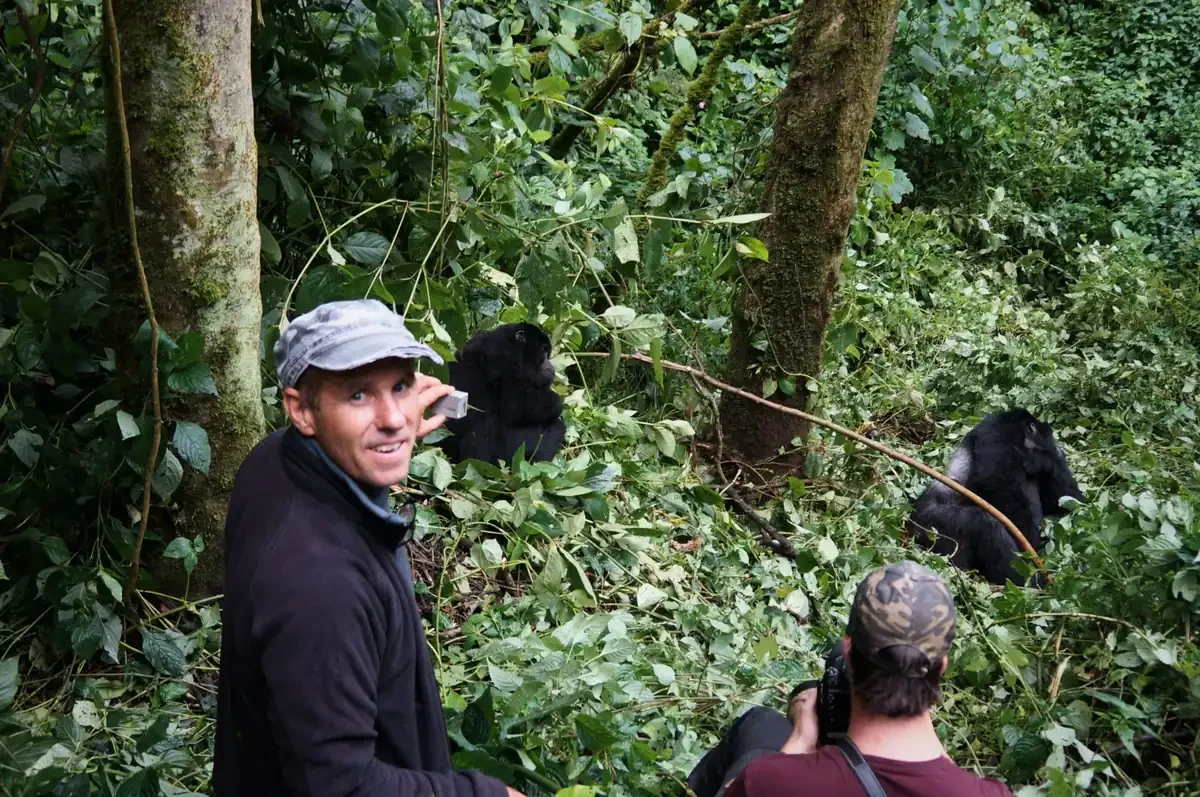
We set off and struggled to keep pace with our guide, who moved with easy confidence. We slipped down steep sections into a small valley, hands finding branches for balance, boots sliding in the mud. Then, in less than an hour, luck was on our side, we found the family.
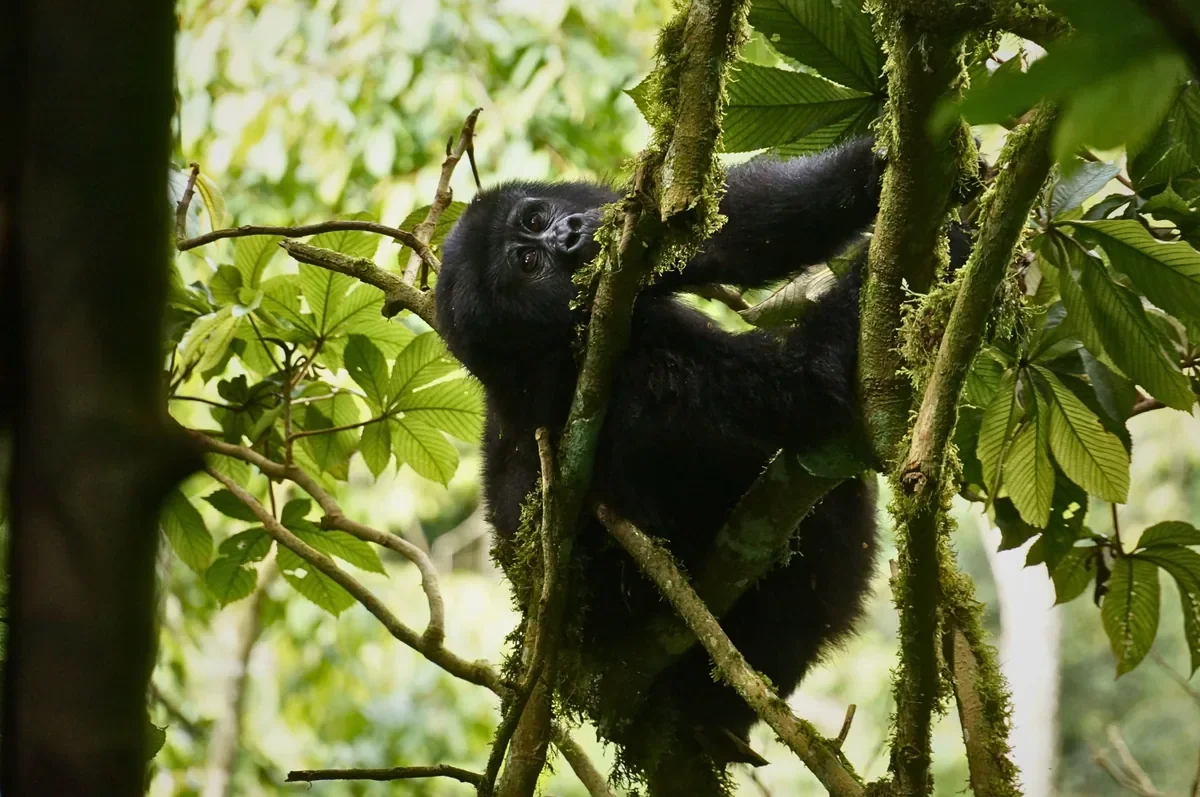
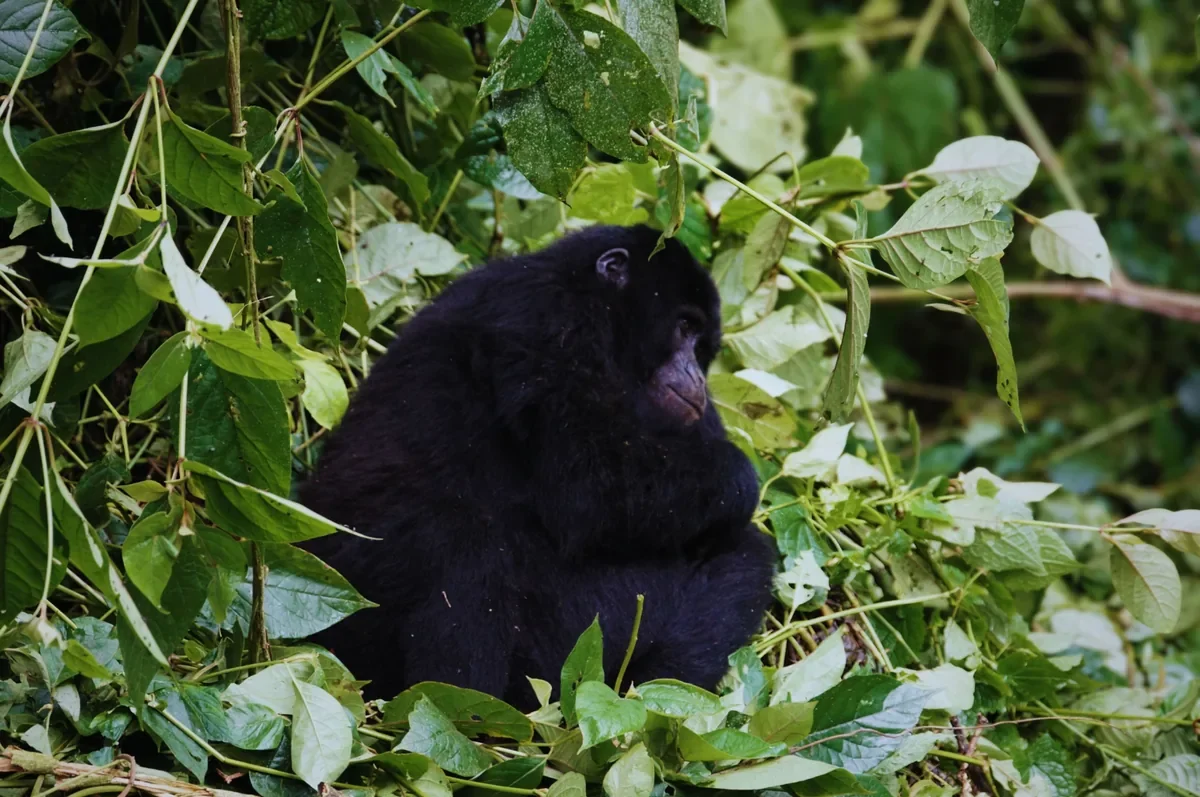
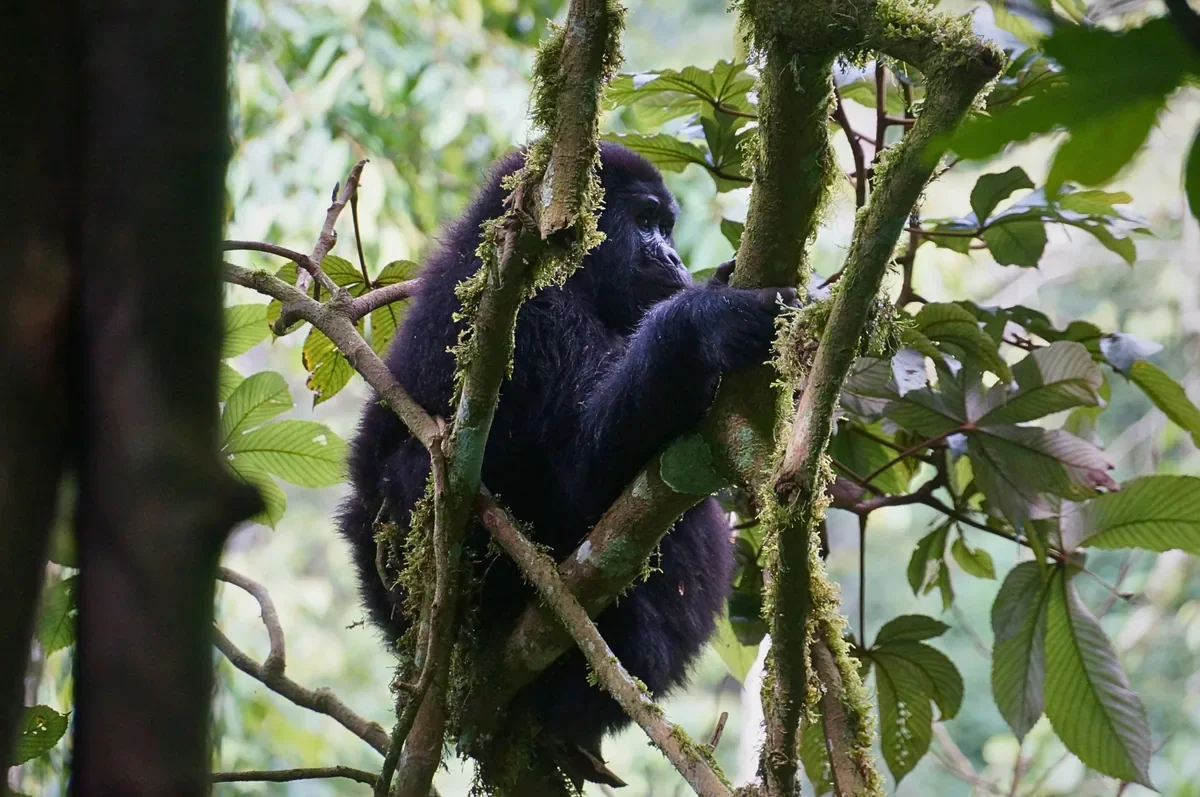
They were spread across the valley floor and into low trees, feeding quietly, some perched impossibly high on narrow branches, calmly munching leaves and fruit. How they balanced without snapping the branches, I still do not know.
They were aware of us, but they did not stop feeding. There were mothers, solid and steady, and infants of different sizes, curious and quick. There were perhaps ten or so in view, but at first we did not see the silverback.
We sat down quietly, settled into the undergrowth, and waited in their world.
And then the silverback arrived, suddenly, without drama, as if he had simply decided it was time to confirm who was in charge. He looked us over, then lowered himself into the soft valley floor. The smell was unmistakable, musky, earthy, and very real, with midges and flies hovering around him. It was not romantic. It was wild.
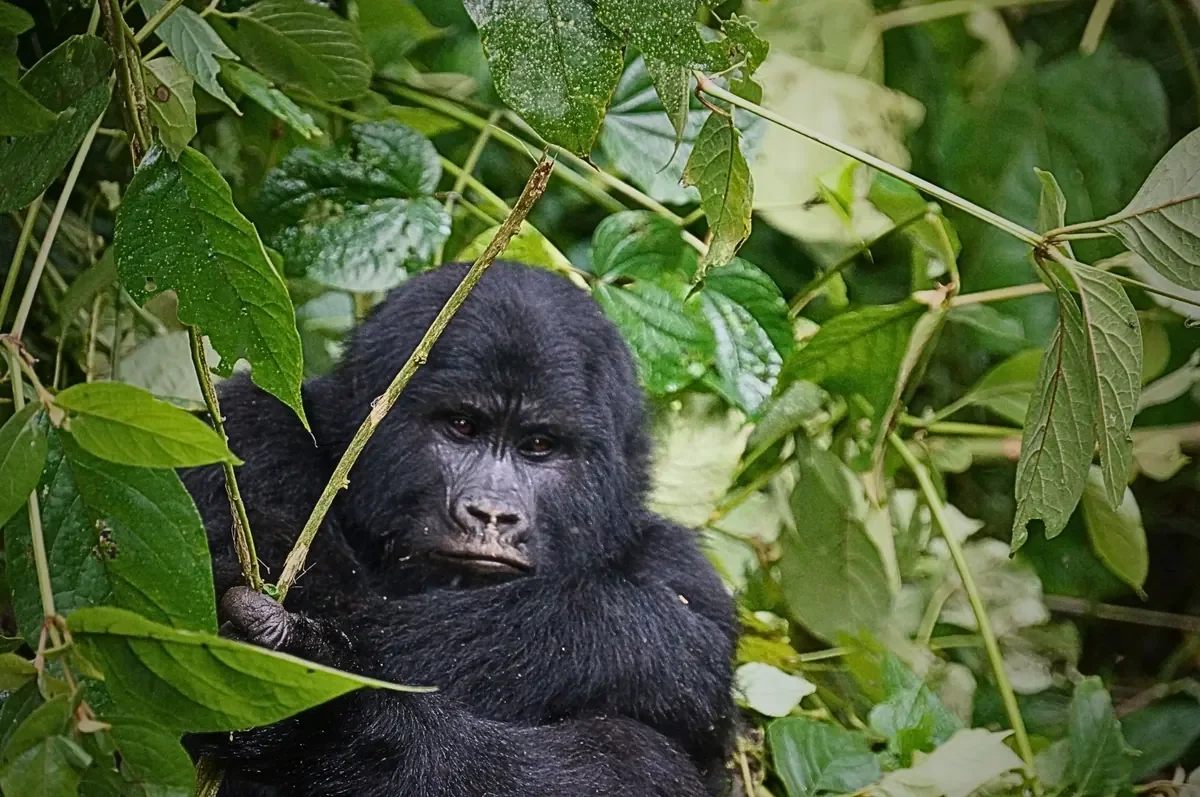
With the silverback present, the family felt complete. This is where the encounter becomes something more than a sighting. You start noticing behaviors that feel familiar. Mothers gently shepherding infants away if they wandered too close. Youngsters watching you with open curiosity. The silverback resting, alert, eyes tracking everything with a calm authority. He seemed to be thinking, measuring, deciding that we were not a threat.
It is difficult to explain, but it can feel like a small divide is crossed. You are aware of how different you are, and yet how much overlaps in simple social behavior. Their intelligence is not a theory, you see it in their eyes, their composure, their choices. That is a big part of the gorilla magic.
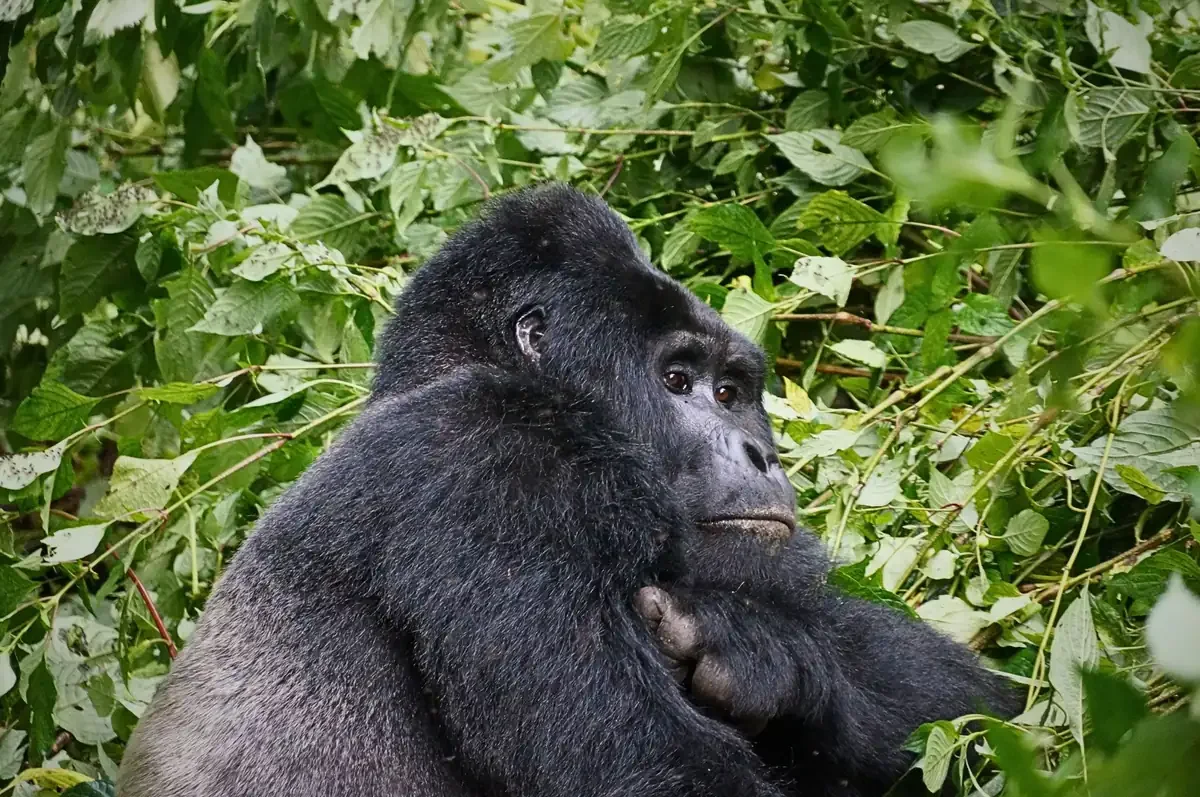
Karamuzi
Another thing we loved is that the encounter gives you time. In many wildlife moments you catch a glimpse, then the animal disappears. With gorillas, you often have a full hour once you reach them. It means you can take photographs and video, not for proof, but to bring the memory home, the expressions, the quiet moments, the tiny interactions within the family.
As the experience concluded
Gorilla trekking is worth doing if it has ever been on your list. The effort, the permits, the travel, the early start, it all fades the moment you are sitting in the forest, sharing a respectful hour with a gorilla family.
We also found Uganda to be a country of warm, friendly people, generous with directions, help, and smiles. Beyond the gorillas, the landscapes are exceptional, mountains, valleys, lakes, and wide skies. We will not forget the sight of farmers planting high on steep slopes in careful rows, or the crisp vegetables and fresh produce that come from those highlands.
Uganda is full of treasures, and yes, the roads can be challenging, but the rewards are enormous.
As we later heard, the family we visited went through changes in leadership, with one silverback retiring and another taking over, then a tragic accident reshaping the group again. It is a reminder that these are not characters in a story, they are wild animals living wild lives, and conservation is never a finished job.
Every new birth is a celebration.
Ready to plan your gorilla trekking experience?
We can handle permits, lodge selection, routing, and the small details that make the difference. Tell us your travel window and we'll put it together.
If you enjoy these insights, Craig sends a monthly newsletter with more — destination notes, safari advice, and trip ideas straight from the field.
-
Year-round. Drier months — June to September and December to February — generally mean easier trails and less mud. Wetter months bring lush forest and dramatic scenery but expect slippery conditions. Either way, start early and bring waterproof clothing.
-
Uganda gorilla permits are currently $800 per person, covering the one-hour encounter with the habituated family. Permits are limited — book 6 to 12 months ahead for peak months.
-
Long trousers tucked into your socks, long sleeves, waterproof boots with good grip, gloves, and a rain jacket. Pack a dry bag for your camera. NOMARA Africa Travel lodges all provide the necessary equipment on site, including jackets, boot protectors, and other trekking gear.
-
It varies. Some treks reach the gorillas in under an hour; others take most of a day depending on where the family has moved. Once found, viewing is limited to one hour. Allow a full day and treat the trek itself as part of the experience.
-
Both are excellent. Uganda's Bwindi has a wilder, more remote feel and a lower permit cost. Rwanda's Volcanoes National Park offers a shorter trek for many visitors and pairs well with other Rwanda highlights, though permits are more expensive. Our team at NOMARA Africa Travel will advise based on your wider itinerary.